Chapter 04 · 2112 – 2004 BCE
Ur III · Neo-Sumerian
A bureaucratic golden age, the Code of Ur-Nammu.
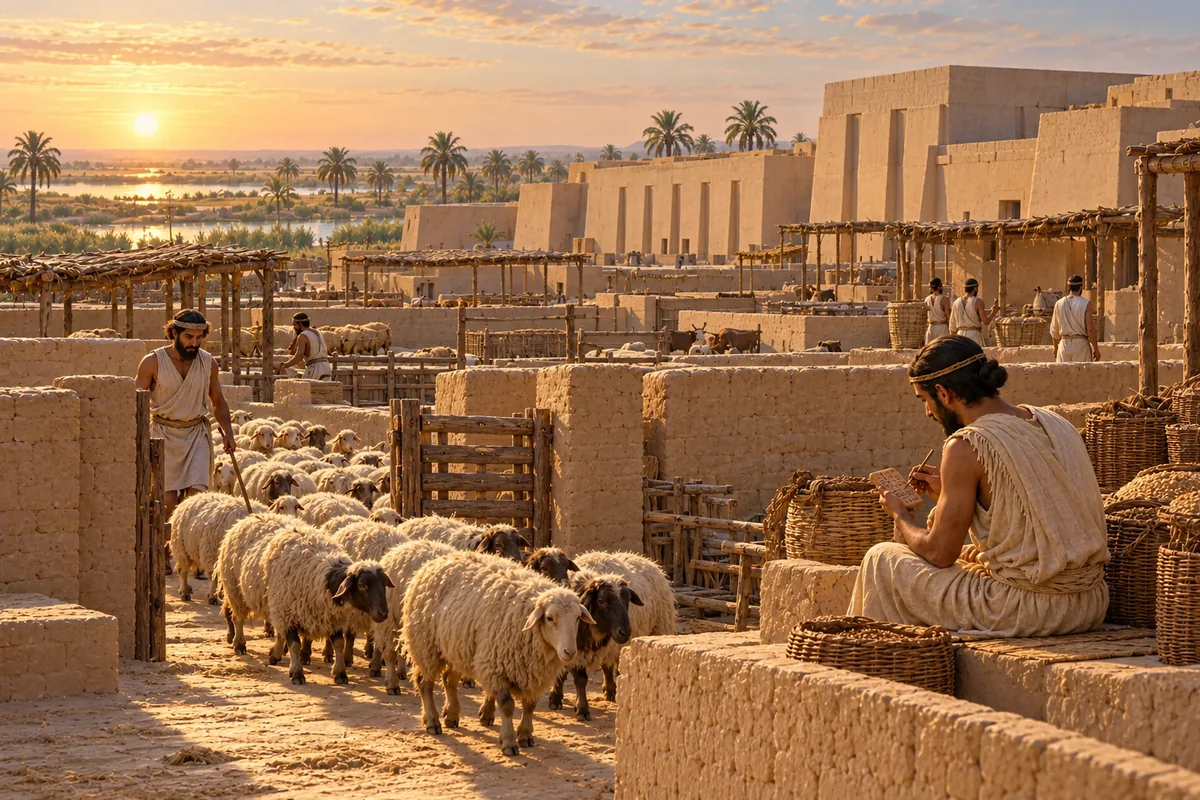
~2050 BCE · Reconstructed composite — see ORACC entry for manuscript witnesses
Amar-Suena 2060add
In plain English
Amar-Suena — powerful king, king of Ur, king of the four quarters — is the divine master named here. The scribe Lugal-ituda, son of Ur-Dumuzida, declares himself Amar-Suena's servant.
AI-generated reading paraphrase; compare with the translation below.
“(i 1) Amar-Suena, the powerful king, king of Urim, king of the four quarters: Lugal-ituda, the scribe, child of Ur-Dumuzida, is your servant.”
Source: Electronic Text Corpus of Sumerian Royal Inscriptions (ETCSRI), University of Vienna, edited by Gábor Zólyomi et al. https://oracc.museum.upenn.edu/etcsri/Q004354/
Read the full tablet entry~2050 BCE · Reconstructed composite — see ORACC entry for manuscript witnesses
Amar-Suena 2061add
In plain English
Amar-Suena — powerful king, king of Ur, king of the four quarters — is addressed directly: a governor of Umma, whose name is damaged and unreadable, declares himself the king's servant.
AI-generated reading paraphrase; compare with the translation below.
“(i 1) Amar-Suena, the powerful king, king of Urim, king of the four quarters: ..., the governor of Umma, is your servant.”
Source: Electronic Text Corpus of Sumerian Royal Inscriptions (ETCSRI), University of Vienna, edited by Gábor Zólyomi et al. https://oracc.museum.upenn.edu/etcsri/Q004162/
Read the full tablet entry~2050 BCE · Reconstructed composite — see ORACC entry for manuscript witnesses
Amar-Suena 2062add
In plain English
Amar-Suena, the powerful man and king of Ur, is addressed directly: a scribe — whose name is lost, the surface being damaged at that point — declares himself the king's servant.
AI-generated reading paraphrase; compare with the translation below.
“(i 1) Amar-Suena, the powerful man, king of Urim: ..., the scribe, is your servant.”
Source: Electronic Text Corpus of Sumerian Royal Inscriptions (ETCSRI), University of Vienna, edited by Gábor Zólyomi et al. https://oracc.museum.upenn.edu/etcsri/Q004163/
Read the full tablet entry~2050 BCE · Reconstructed composite — see ORACC entry for manuscript witnesses
Amar-Suena 2063add
In plain English
Amar-Suena — whose name Enlil himself proclaimed at Nippur, steadfast supporter of Enlil's temple, mighty king of Ur and ruler of the four quarters of the world — gave this seal to Šu-Kabta, his son-in-law.
AI-generated reading paraphrase; compare with the translation below.
“(i 1) Amar-Suena, whose name was proclaimed by Enlil in Nibru, the steadfast supporter of Enlil's temple, the powerful man, king of Urim, king of the four quarters, presented this (seal) to Šu-Kabta, his son-in-law.”
Source: Electronic Text Corpus of Sumerian Royal Inscriptions (ETCSRI), University of Vienna, edited by Gábor Zólyomi et al. https://oracc.museum.upenn.edu/etcsri/Q004899/
Read the full tablet entry~2050 BCE · Reconstructed composite — see ORACC entry for manuscript witnesses
Amar-Suena 2064add
In plain English
Amar-Suena — powerful king, king of Ur, king of the four quarters — receives a dedication from Lu-Nanna, the royal scribe and son of Ur-Suen, who identifies himself as the king's servant.
AI-generated reading paraphrase; compare with the translation below.
“(i 1) Amar-Suena, the powerful king, king of Urim, king of the four quarters: Lu-Nanna, the royal scribe, child of Ur-Suen, is your servant.”
Source: Electronic Text Corpus of Sumerian Royal Inscriptions (ETCSRI), University of Vienna, edited by Gábor Zólyomi et al. https://oracc.museum.upenn.edu/etcsri/Q009353/
Read the full tablet entry~2050 BCE · Reconstructed composite — see ORACC entry for manuscript witnesses
Amar-Suena 21
Dedicatory inscription naming Taddin-Eštar as a royal child of Amar-Suena, adding a personal name to the otherwise sparse prosopography of the Ur III royal family.
In plain English
Amar-Suena, king of Ur and king of the four quarters, presented this vessel to Taddin-Eštar, his beloved child. The opening of the inscription is lost.
AI-generated reading paraphrase; compare with the translation below.
“(1') ... Amar-Suena, king of Urim, king of the four quarterṣ ... presented (this vessel) to Taddin-Eštar, his beloved šhild.”
Source: Electronic Text Corpus of Sumerian Royal Inscriptions (ETCSRI), University of Vienna, edited by Gábor Zólyomi et al. https://oracc.museum.upenn.edu/etcsri/Q001799/
Read the full tablet entry~2050 BCE · Reconstructed composite — see ORACC entry for manuscript witnesses
Amar-Suena 22 / CDLI Seals 005914 (CDLI Seals 005914 (composite))
In plain English
Amar-Suena — powerful man, king of Ur, king of the four quarters of the world — claims Ur-Bau as his child.
AI-generated reading paraphrase; compare with the translation below.
“(1) Amar-Suena, the powerful man, king of Urim, king of the four quarters: Ur-Bau is his child.”
Source: Electronic Text Corpus of Sumerian Royal Inscriptions (ETCSRI), University of Vienna, edited by Gábor Zólyomi et al. https://oracc.museum.upenn.edu/etcsri/Q001800/
Read the full tablet entry~2050 BCE · Anonymous 429769 — private: anonymous, uncertain
Anonymous 429769
In plain English
This tablet records a grain transaction: 5 gur and 1 barig of barley, given as an interest-free loan, from a man named Ur-Suana. Another person — whose name is only partly preserved — received it. The tablet then names a year (the date formula), but the text is too damaged to read clearly, and it ends with a fragmentary reference to 'son of ...' before breaking off entirely.
AI-generated reading paraphrase; compare with the translation below.
“5(aš) 1(barig) barley — interest-free (loan), from Ur-Suana, ...gani(?), received. [Year: ...] ... ... ... ... ... ... ... son of ... ...”
Source: engine:claude-sonnet-5 (2026-07-12/v7-evolved) · claude-sonnet-5 · low confidence
Read the full tablet entry