Chapter 04 · 2112 – 2004 BCE
Ur III · Neo-Sumerian
A bureaucratic golden age, the Code of Ur-Nammu.
~2112 BCE · AO 03331 — Louvre Museum, Paris, France
RTC 263
In plain English
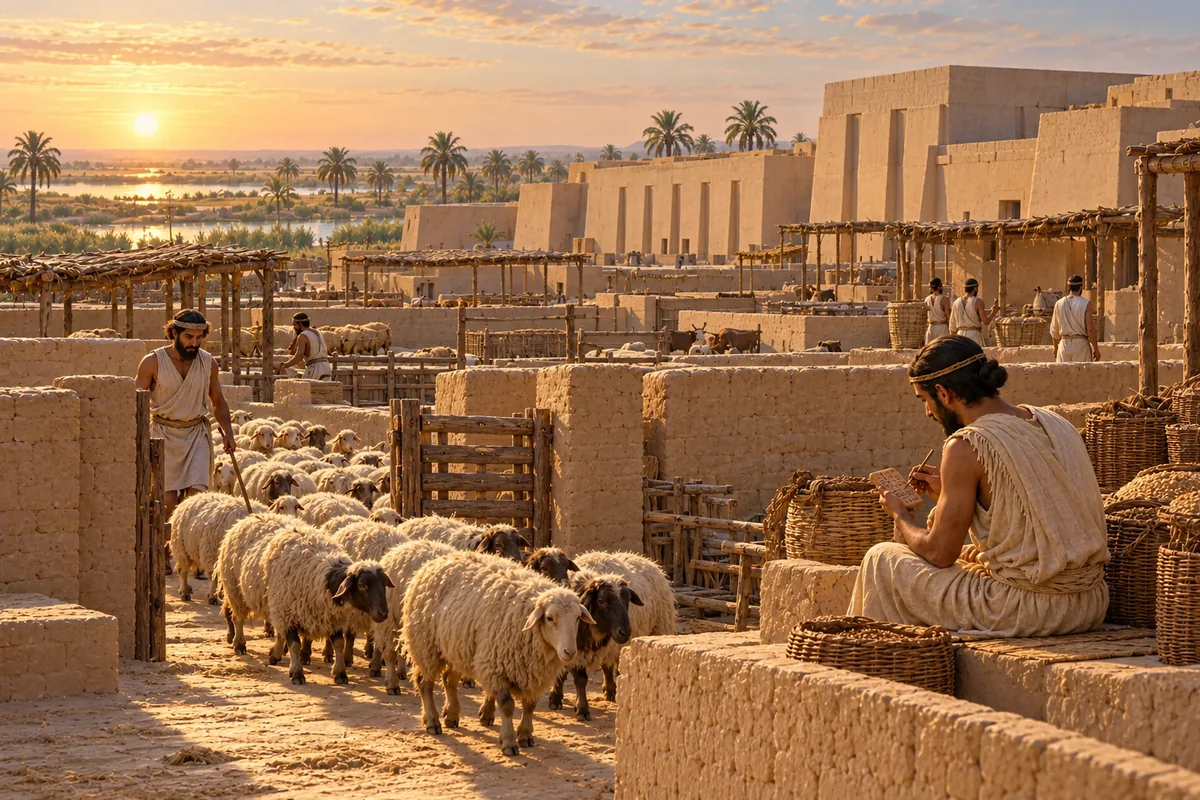
A shipment of wool was weighed on the official reference weight: 3 talents and 11 minas in total, but the actual amount came up 29 minas short of what was expected. This shortfall is charged to a man named Lu-dumuzi. A separate lot of wool, 3 talents 34 minas, was also weighed out. The next lines are too damaged to read, though they mention sheep's wool. The record is countersigned under the authority of Ur-abba, governor of the city, and dated to the year King Ur-Namma ordered the road built or straightened from the lowlands to the highlands.
AI-generated reading paraphrase; compare with the translation below.
“3 talents (gu2), 11 minas of wool, from/by the great stone-weight (na4-mah) — was weighed out. Deficit: 30 minas less 1 (= 29 minas) — (for) Lu-dumuzi. 3 talents, 34 minas — was weighed out. ... [...] ... (broken/illegible) wool of sheep [...] (broken) Ur-abba, the governor (ensi2). Year: "Ur-Namma the king put the road in order from the lowland to the highland."”
Source: engine:claude-sonnet-5 (2026-07-12/v7-evolved) · claude-sonnet-5 · medium confidence
Read the full tablet entry~2100 BCE · Reconstructed composite — see ORACC entry for manuscript witnesses
E-IGI.NIM-pa'e 1
“(1) For Diĝir-mah, E-iginim-pa-e, ruler of Adab, ..., builder of the E-mah.”
Source: Electronic Text Corpus of Sumerian Royal Inscriptions (ETCSRI), University of Vienna, edited by Gábor Zólyomi et al. https://oracc.museum.upenn.edu/etcsri/Q001202/
Read the full tablet entry~2100 BCE · Reconstructed composite — see ORACC entry for manuscript witnesses
E-IGI.NIM-pa'e 2
Commemorates E-iginim-pa'e of Adab's construction of the E-mah temple for the goddess Diĝir-mah, attesting royal building piety and the foundation-peg ritual at one of Sumer's lesser-documented city-states.
“(1) For Diĝir-mah, E-iginim-pa-e, ruler of Adab, built the E-mah. At its base, he drove in foundation pegs.”
Source: Electronic Text Corpus of Sumerian Royal Inscriptions (ETCSRI), University of Vienna, edited by Gábor Zólyomi et al. https://oracc.museum.upenn.edu/etcsri/Q001201/
Read the full tablet entry~2100 BCE · Reconstructed composite — see ORACC entry for manuscript witnesses
Erridu-pizir 1
“(colophon 1, 1) The inscription on its socle. (colophon 2, 1) The inscription .... This statue ....”
Source: Electronic Text Corpus of Sumerian Royal Inscriptions (ETCSRI), University of Vienna, edited by Gábor Zólyomi et al. https://oracc.museum.upenn.edu/etcsri/Q001433/
Read the full tablet entry~2100 BCE · Reconstructed composite — see ORACC entry for manuscript witnesses
Erridu-pizir 3
“(colophon 1, 1) The inscription on its socle. (colophon 2, 1) The inscription on his shoulder. (colophon 3, 1) Tablet with 3 inscriptions (from) the statues of Erridu-pizir.”
Source: Electronic Text Corpus of Sumerian Royal Inscriptions (ETCSRI), University of Vienna, edited by Gábor Zólyomi et al. https://oracc.museum.upenn.edu/etcsri/Q001435/
Read the full tablet entry~2100 BCE · Reconstructed composite — see ORACC entry for manuscript witnesses
Gan-kug-sig 1 / CDLI Seals 001443 (CDLI Seals 001443 (physical))
“(1) Gan-kunsig, erešdiĝir priestess of Pabilsaĝ.”
Source: Electronic Text Corpus of Sumerian Royal Inscriptions (ETCSRI), University of Vienna, edited by Gábor Zólyomi et al. https://oracc.museum.upenn.edu/etcsri/Q003660/
Read the full tablet entry~2100 BCE · Reconstructed composite — see ORACC entry for manuscript witnesses
Geme-Bau 1 (Prima del'alfabeto 06)
“(1) To Šul-šagana, her personal god, Geme-Bau, erešdiĝir priestess of Bau, dedicated this for her life.”
Source: Electronic Text Corpus of Sumerian Royal Inscriptions (ETCSRI), University of Vienna, edited by Gábor Zólyomi et al. https://oracc.museum.upenn.edu/etcsri/Q004249/
Read the full tablet entry~2100 BCE · Reconstructed composite — see ORACC entry for manuscript witnesses
Giša-kidu 1
“(1) When Šara became glorious, and Barag-irnun, spouse of Ĝiša-kidug, king of Umma, child of Ur-Luma, king of Umma, descendant of En-akale, king of Umma, daughter-in-law of Il, king of Umma, built a holy dais for Šara of the E-mah, then she presented Šara with this (object) for the E-mah for her well-being.”
Source: Electronic Text Corpus of Sumerian Royal Inscriptions (ETCSRI), University of Vienna, edited by Gábor Zólyomi et al. https://oracc.museum.upenn.edu/etcsri/Q001325/
Read the full tablet entry