Chapter 04 · 2112 – 2004 BCE
Ur III · Neo-Sumerian
A bureaucratic golden age, the Code of Ur-Nammu.
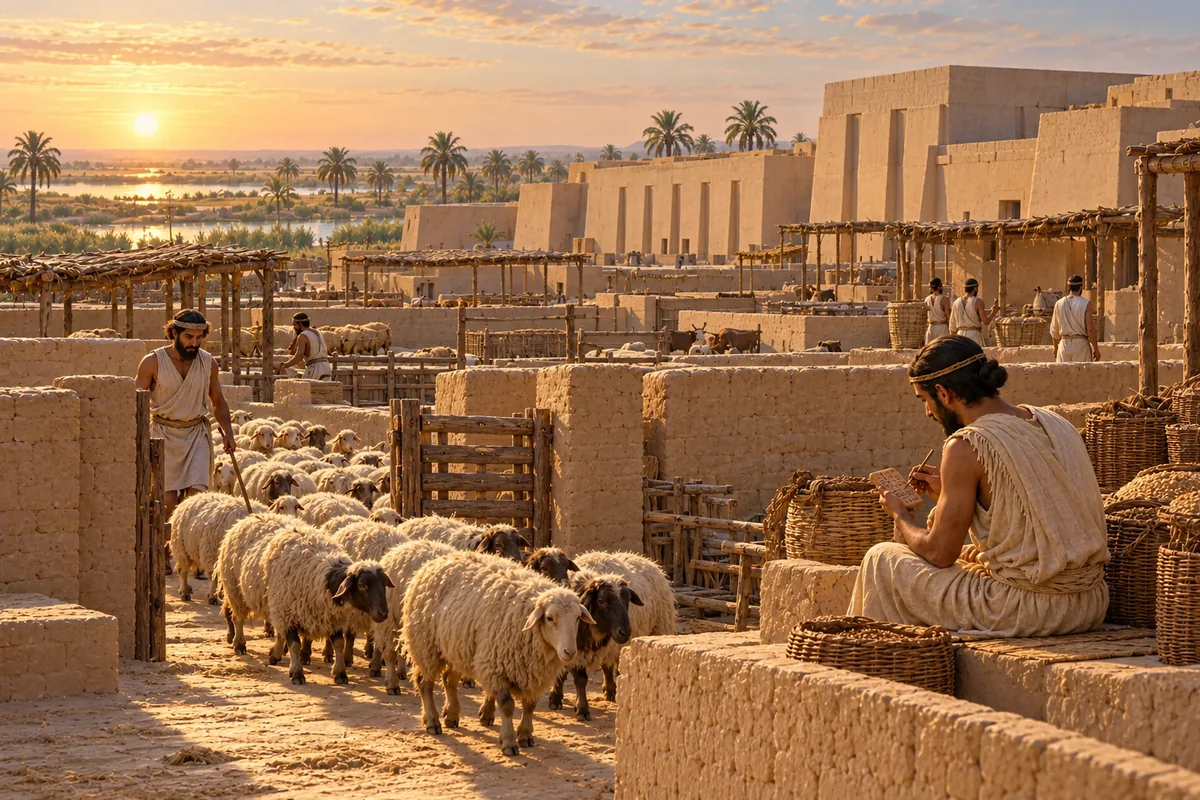
~2050 BCE · Reconstructed composite — see ORACC entry for manuscript witnesses
Šulgi 05
“(1) For Ninurima, his lady, Šulgi, the powerful man, king of Urim, king of Sumer and Akkad, built her temple in Karzida.”
Source: Electronic Text Corpus of Sumerian Royal Inscriptions (ETCSRI), University of Vienna, edited by Gábor Zólyomi et al. https://oracc.museum.upenn.edu/etcsri/Q001653/
Read the full tablet entry~2050 BCE · Reconstructed composite — see ORACC entry for manuscript witnesses
Šulgi 06
Attests Šulgi's building works at the E-ana temple complex in Uruk, linking his patronage of Inana's cult to his claim over the dual title 'king of Sumer and Akkad.'
“(1) For Inana, the lady of the E-ana, his lady, Šulgi, the powerful man, king of Urim, king of Sumer and Akkad, restored the E-ana, (and) built its great wall.”
Source: Electronic Text Corpus of Sumerian Royal Inscriptions (ETCSRI), University of Vienna, edited by Gábor Zólyomi et al. https://oracc.museum.upenn.edu/etcsri/Q000962/
Read the full tablet entry~2050 BCE · Reconstructed composite — see ORACC entry for manuscript witnesses
Šulgi 07
“(1) For Ninsiana, his lady, Šulgi, the powerful man, king of Urim, king of Sumer and Akkad, built her temple.”
Source: Electronic Text Corpus of Sumerian Royal Inscriptions (ETCSRI), University of Vienna, edited by Gábor Zólyomi et al. https://oracc.museum.upenn.edu/etcsri/Q001654/
Read the full tablet entry~2050 BCE · Reconstructed composite — see ORACC entry for manuscript witnesses
Šulgi 08
“(1) For Ninšubur of Unug, his lady, Šulgi, the powerful man, king of Urim, ....”
Source: Electronic Text Corpus of Sumerian Royal Inscriptions (ETCSRI), University of Vienna, edited by Gábor Zólyomi et al. https://oracc.museum.upenn.edu/etcsri/Q001655/
Read the full tablet entry~2050 BCE · Reconstructed composite — see ORACC entry for manuscript witnesses
Šulgi 09
Attests Šulgi's construction of the E-šeššeše-ĝara for Nanše at Lagash, placing royal temple-building patronage at the intersection of Ur III statecraft and the goddess's traditional role as divine judge of social justice.
“(1) For Nanše, the mighty lady, lady of the boundaries, his lady, Šulgi, the powerful man, king of Urim, king of Sumer and Akkad, built the E-šeššeše-ĝara, her beloved temple.”
Source: Electronic Text Corpus of Sumerian Royal Inscriptions (ETCSRI), University of Vienna, edited by Gábor Zólyomi et al. https://oracc.museum.upenn.edu/etcsri/Q000963/
Read the full tablet entry~2050 BCE · Reconstructed composite — see ORACC entry for manuscript witnesses
Šulgi 10
Dedicates the E-šeššeše-ĝara temple to Nanše, goddess of social justice and boundaries, placing Šulgi's building patronage within the religious infrastructure that legitimised Ur III royal authority.
“(1) For Nanše, the lady of the boundaries, his lady, Šulgi, the powerful man, king of Urim, built her E-šeššeše-ĝara.”
Source: Electronic Text Corpus of Sumerian Royal Inscriptions (ETCSRI), University of Vienna, edited by Gábor Zólyomi et al. https://oracc.museum.upenn.edu/etcsri/Q000964/
Read the full tablet entry~2050 BCE · Reconstructed composite — see ORACC entry for manuscript witnesses
Šulgi 100add
Attests Šulgi's patronage of Martu, the Amorite deity, inside a Sumerian royal titulary — evidence that Ur III kings co-opted tribal gods to consolidate legitimacy on their western frontier.
“(o 1) For Martu, his lord, Šulgi, the powerful man, king of Urim, king of Sumer and Akkad, built his temple.”
Source: Electronic Text Corpus of Sumerian Royal Inscriptions (ETCSRI), University of Vienna, edited by Gábor Zólyomi et al. https://oracc.museum.upenn.edu/etcsri/Q008912/
Read the full tablet entry~2050 BCE · Reconstructed composite — see ORACC entry for manuscript witnesses
Šulgi 102add (J.E. Reade -- J. Taylor, Beads of Possible Indus Origin with Sumerian Royal Inscriptions, in D. Frenez et al., eds., Walking with the Unicorn ..., Oxford: Archeopress, 527.)
“(i 1) For Bau, the daughter of An, the lady of Iri-kug, Šulgi, the powerful man, king of Urim, dedicated this (bead) for his well-being.”
Source: Electronic Text Corpus of Sumerian Royal Inscriptions (ETCSRI), University of Vienna, edited by Gábor Zólyomi et al. https://oracc.museum.upenn.edu/etcsri/Q009690/
Read the full tablet entry