Chapter 04 · 2112 – 2004 BCE
Ur III · Neo-Sumerian
A bureaucratic golden age, the Code of Ur-Nammu.
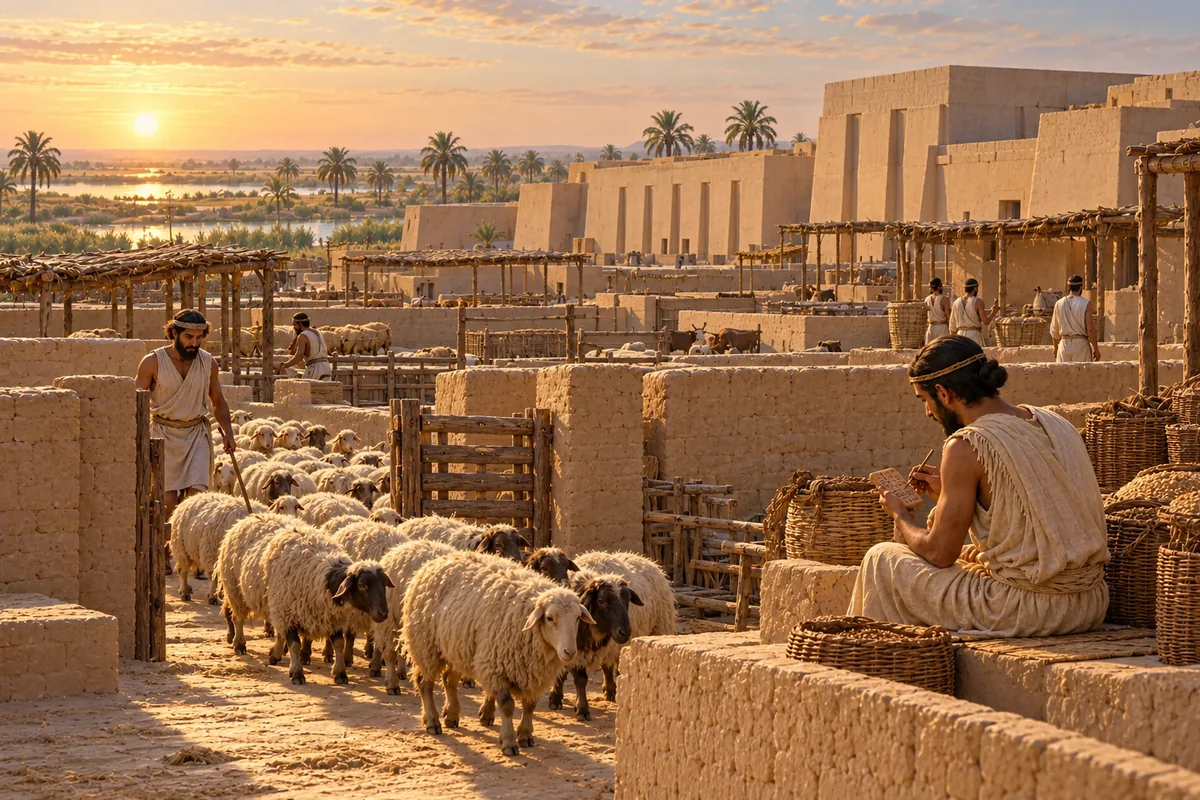
~2100 BCE · Reconstructed composite — see ORACC entry for manuscript witnesses
Lugal-giš 2003 / CDLI Seals 001434 (CDLI Seals 001434 (physical))
“(1) Lugalĝeš, governor of Adab: Namtare, the scribe, the temple administrator of Enki, is his servant.”
Source: Electronic Text Corpus of Sumerian Royal Inscriptions (ETCSRI), University of Vienna, edited by Gábor Zólyomi et al. https://oracc.museum.upenn.edu/etcsri/Q001442/
Read the full tablet entry~2100 BCE · Reconstructed composite — see ORACC entry for manuscript witnesses
Lugal-KISAL-si 1
Dedicatory inscription of Lugal-kisalesi attests a king ruling both Uruk and Ur simultaneously, documenting a rare dual kingship in the late Early Dynastic–Ur III transitional period.
“(1) To Enlil, the king of all lands, his master, Lugal-kisale-si, king of Unug, king of Urim, firstborn child of Lugal-kiĝeneš-dudu, king of Unug, king of Urim, dedicated this (vessel) for his well-being.”
Source: Electronic Text Corpus of Sumerian Royal Inscriptions (ETCSRI), University of Vienna, edited by Gábor Zólyomi et al. https://oracc.museum.upenn.edu/etcsri/Q001374/
Read the full tablet entry~2100 BCE · Reconstructed composite — see ORACC entry for manuscript witnesses
Lugal-KISAL-si 2
“(1) For Namma, the spouse of An, Lugal-kisale-si, king of Unug, king of Urim, built the temple of Namma.”
Source: Electronic Text Corpus of Sumerian Royal Inscriptions (ETCSRI), University of Vienna, edited by Gábor Zólyomi et al. https://oracc.museum.upenn.edu/etcsri/Q003669/
Read the full tablet entry~2100 BCE · Reconstructed composite — see ORACC entry for manuscript witnesses
Lugal-KISAL-si 3
“(1) To ..., Me-girimta, child born to Lugal-kisale-si, spouse of Muni-hursaĝ, dedicated this (bowl).”
Source: Electronic Text Corpus of Sumerian Royal Inscriptions (ETCSRI), University of Vienna, edited by Gábor Zólyomi et al. https://oracc.museum.upenn.edu/etcsri/Q001376/
Read the full tablet entry~2100 BCE · Reconstructed composite — see ORACC entry for manuscript witnesses
Me-silim 1
“(1) Me-silim, king of Kiš, builder of Ninĝirsu's temple, diplayed this (mace) for Ninĝirsu. (7) (At that time) Lugal-šag-engur was the ruler of Lagaš.”
Source: Electronic Text Corpus of Sumerian Royal Inscriptions (ETCSRI), University of Vienna, edited by Gábor Zólyomi et al. https://oracc.museum.upenn.edu/etcsri/Q001244/
Read the full tablet entry~2100 BCE · Reconstructed composite — see ORACC entry for manuscript witnesses
Me-silim 2
“(1) Me-silim, king of Kiš, performed the burgi ritual in the E-kiri. (5) (At that time) Nin-kisale-si was the ruler of Adab.”
Source: Electronic Text Corpus of Sumerian Royal Inscriptions (ETCSRI), University of Vienna, edited by Gábor Zólyomi et al. https://oracc.museum.upenn.edu/etcsri/Q001245/
Read the full tablet entry~2100 BCE · Reconstructed composite — see ORACC entry for manuscript witnesses
Me-silim 3
“(1) Me-silim, king of Kiš, the beloved child of Ninhursaĝa, ....”
Source: Electronic Text Corpus of Sumerian Royal Inscriptions (ETCSRI), University of Vienna, edited by Gábor Zólyomi et al. https://oracc.museum.upenn.edu/etcsri/Q001246/
Read the full tablet entry~2100 BCE · Reconstructed composite — see ORACC entry for manuscript witnesses
Mes-kigala 2001
“(1) To Ninšubur, the envoy of An, for the well-being of Meš-kigala, governor of ....”
Source: Electronic Text Corpus of Sumerian Royal Inscriptions (ETCSRI), University of Vienna, edited by Gábor Zólyomi et al. https://oracc.museum.upenn.edu/etcsri/Q003637/
Read the full tablet entry