Chapter 04 · 2112 – 2004 BCE
Ur III · Neo-Sumerian
A bureaucratic golden age, the Code of Ur-Nammu.
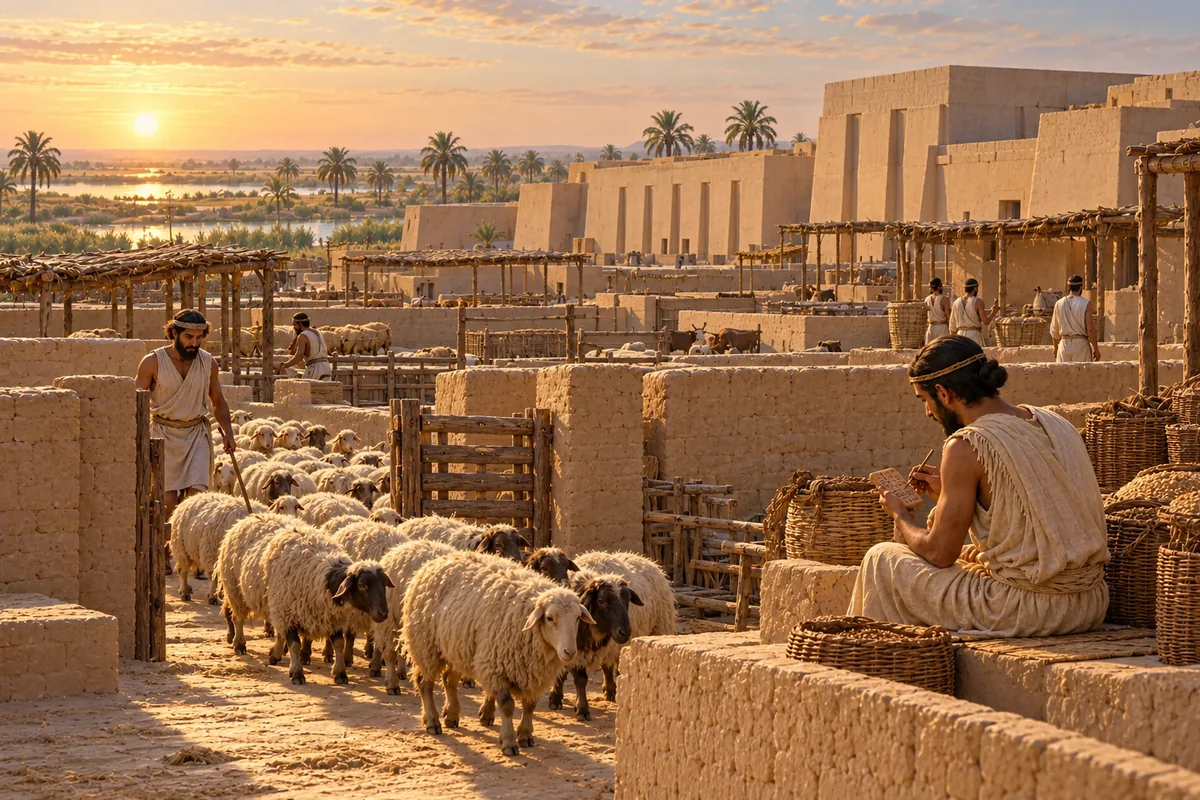
~2050 BCE · Reconstructed composite — see ORACC entry for manuscript witnesses
Amar-Suena 12
Records Amar-Suena's construction of a royal jail at Ur — one of the earliest explicit textual attestations of a dedicated carceral institution in Mesopotamian history.
In plain English
Amar-Suena, powerful king of Ur and king of the four quarters of the world, built a jail in Ur for the god Nanna. He named it 'Amar-Suena is the beloved of Nanna.'
AI-generated reading paraphrase; compare with the translation below.
“(1) Amar-Suena, the powerful king, king of Urim, king of the four quarters, built for (Nanna) the jail in Urim. The name of this jail is "Amar-Suena is the beloved of Nanna".”
Source: Electronic Text Corpus of Sumerian Royal Inscriptions (ETCSRI), University of Vienna, edited by Gábor Zólyomi et al. https://oracc.museum.upenn.edu/etcsri/Q001795/
Read the full tablet entry~2050 BCE · Reconstructed composite — see ORACC entry for manuscript witnesses
Amar-Suena 13
In plain English
Amar-Suena — whose name Enlil had proclaimed at Nippur, steadfast supporter of Enlil's temple, powerful king of Ur and of the four quarters — fashioned a bronze object (the word is damaged or obscure) for the E-gipar and dedicated it to Inana, lady of battle and his beloved spouse, for his own well-being.
AI-generated reading paraphrase; compare with the translation below.
“(1) For Inana, the lady of battle, his beloved spouse, Amar-Suena, whose name was proclaimed by Enlil in Nibru, the steadfast supporter of Enlil's temple, the powerful king, king of Urim, king of the four quarters, fashioned her bronze ... of the E-ĝipar. He dedicated it to her for his well-being.”
Source: Electronic Text Corpus of Sumerian Royal Inscriptions (ETCSRI), University of Vienna, edited by Gábor Zólyomi et al. https://oracc.museum.upenn.edu/etcsri/Q000986/
Read the full tablet entry~2050 BCE · Reconstructed composite — see ORACC entry for manuscript witnesses
Amar-Suena 14
In plain English
Amar-Suena — strong king of Ur and king of the four quarters — built this temple for Inana, lady of the evening, his divine mistress.
AI-generated reading paraphrase; compare with the translation below.
“(1) For Inana, lady of the evening, her lady, Amar-Suena, the powerful man, king of Urim, king of the four quarters, built her temple.”
Source: Electronic Text Corpus of Sumerian Royal Inscriptions (ETCSRI), University of Vienna, edited by Gábor Zólyomi et al. https://oracc.museum.upenn.edu/etcsri/Q000987/
Read the full tablet entry~2050 BCE · Reconstructed composite — see ORACC entry for manuscript witnesses
Amar-Suena 15
Dedicatory inscription of Amar-Suena for Enki's Abzu temple at Eridu, attesting the third Ur III king's building programme and his claim to universal rule under Enlil's authority.
In plain English
Amar-Suena — whose name Enlil himself proclaimed at Nippur, steadfast supporter of Enlil's temple, powerful king of Ur and king of the four quarters — built the Abzu, Enki's beloved shrine, as an offering to Enki, his cherished master.
AI-generated reading paraphrase; compare with the translation below.
“(i 1) Amar-Suena, whose name was proclaimed by Enlil in Nibru, the steadfast supporter of Enlil's temple, the powerful king, king of Urim, king of the four quarters, built (Enki's) beloved Abzu for Enki, his beloved master.”
Source: Electronic Text Corpus of Sumerian Royal Inscriptions (ETCSRI), University of Vienna, edited by Gábor Zólyomi et al. https://oracc.museum.upenn.edu/etcsri/Q000988/
Read the full tablet entry~2050 BCE · Reconstructed composite — see ORACC entry for manuscript witnesses
Amar-Suena 16
Records Amar-Suena's foundation of the first ĝipar (high-priestess residence) at Karzida, attesting the Ur III crown's active role in extending Nanna's cult into previously unserved cult centres.
In plain English
Karzida had never had a ĝipar built there, and no en priestess had ever lived in the city, until Amar-Suena changed that. Amar-Suena — whose name Enlil had proclaimed in Nippur, steadfast supporter of Enlil's temple, just god, the Utu of his land, powerful king, king of Ur, king of the four quarters, and beloved of Nanna — built a holy ĝipar for Nanna of Karzida, his beloved master, and installed his beloved en priestess inside it. By doing this, Amar-Suena would lengthen his own days. He dedicated the building to Nanna for his own well-being.
AI-generated reading paraphrase; compare with the translation below.
“(1) In Karzida, where since the beginning of time there never had been a ĝipar built and no en priestess had dwelt, Amar-Suena, whose name was proclaimed by Enlil in Nibru, the steadfast supporter of Enlil's temple, the just god, the Utu of his land, the powerful king, king of Urim, king of the four quarters, the beloved of Nanna, built his holy ĝipar for Nanna of Karzida, his beloved master, (and) made his beloved en priestess enter it. In so doing Amar-Suena will lengthen the days (of his life). He dedicated it for his well-being to him.”
Source: Electronic Text Corpus of Sumerian Royal Inscriptions (ETCSRI), University of Vienna, edited by Gábor Zólyomi et al. https://oracc.museum.upenn.edu/etcsri/Q000989/
Read the full tablet entry~2050 BCE · Reconstructed composite — see ORACC entry for manuscript witnesses
Amar-Suena 18
Preserves a royal titulary of Amar-Suena — 'king of Urim, king of the four quarters' — attesting the ideological claim to universal sovereignty that defined Ur III kingship at its height.
In plain English
The text names a king — his titles include steadfast supporter of Enlil's temple, powerful king, king of Ur, and king of the four quarters. Whatever came before and after is lost; only this fragment of his royal titulary survives.
AI-generated reading paraphrase; compare with the translation below.
“(1') ... the steadfast supporter of Enlilś temple, the powerful king, king of Urim, king of the four quarterṣ ...”
Source: Electronic Text Corpus of Sumerian Royal Inscriptions (ETCSRI), University of Vienna, edited by Gábor Zólyomi et al. https://oracc.museum.upenn.edu/etcsri/Q001796/
Read the full tablet entry~2050 BCE · Reconstructed composite — see ORACC entry for manuscript witnesses
Amar-Suena 19
In plain English
The inscription names En-maḫ-gal-ana, the en priestess of Nanna.
AI-generated reading paraphrase; compare with the translation below.
“(1) En-maḫ-gal-ana, the en priestess of Nanna.”
Source: Electronic Text Corpus of Sumerian Royal Inscriptions (ETCSRI), University of Vienna, edited by Gábor Zólyomi et al. https://oracc.museum.upenn.edu/etcsri/Q001797/
Read the full tablet entry~2050 BCE · Reconstructed composite — see ORACC entry for manuscript witnesses
Amar-Suena 20 / CDLI Seals 003975 (CDLI Seals 003975 (composite))
In plain English
Nin-ḫedu, daughter of the king: Urgu the animal-fattener declares himself her servant.
AI-generated reading paraphrase; compare with the translation below.
“(1) Nin-ḫedu, the daughter of the king: Urgu, the animal-fattener is your servant.”
Source: Electronic Text Corpus of Sumerian Royal Inscriptions (ETCSRI), University of Vienna, edited by Gábor Zólyomi et al. https://oracc.museum.upenn.edu/etcsri/Q001798/
Read the full tablet entry