Chapter 04 · 2112 – 2004 BCE
Ur III · Neo-Sumerian
A bureaucratic golden age, the Code of Ur-Nammu.
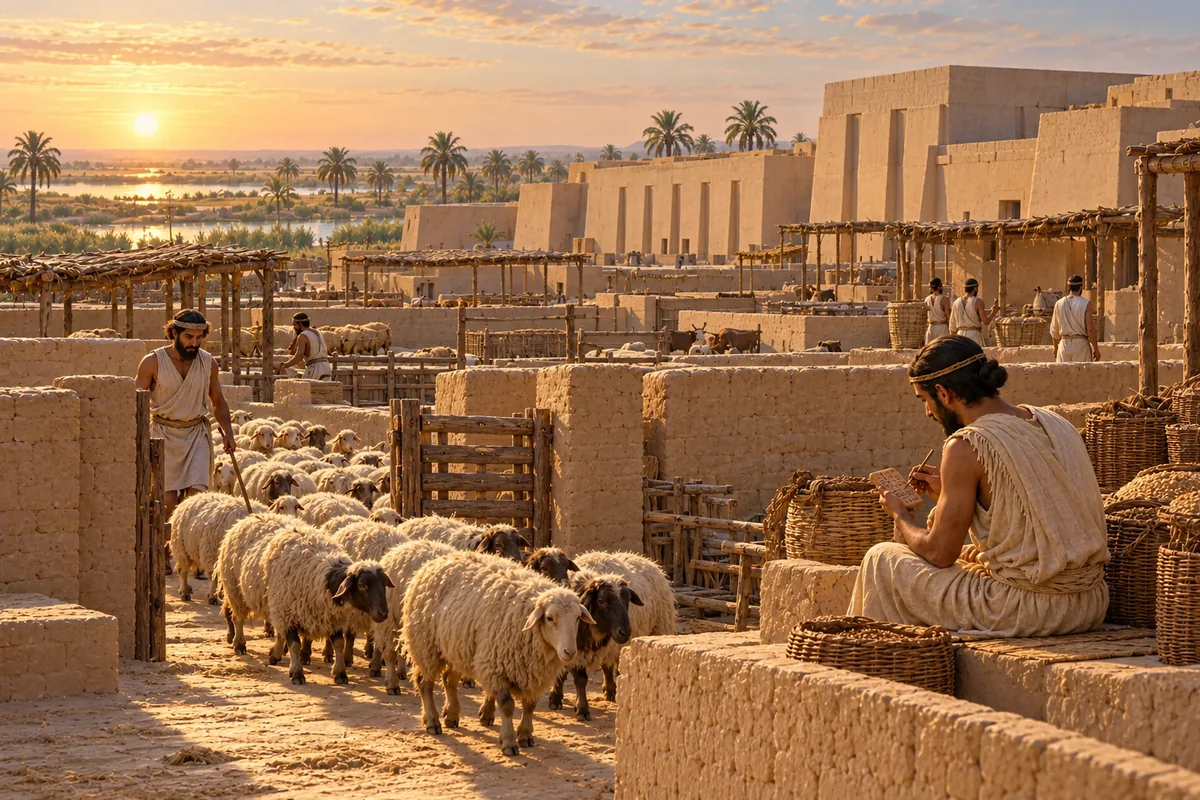
~2072 BCE · CUNES 48-02-021 — Department of Near Eastern Studies, Cornell University, Ithaca, New York, USA
CUSAS 03, 1231
In plain English
A record states that [some quantity, now lost] of dates, measured out in gur-units, were issued from Iškur-illat and received by a man named Adallal. The transaction is dated to the month called "u5-bi2-gu7" in the year when Simurrum was destroyed. Adallal is identified as a cook, working under (or as servant of) an individual or institution called Me-Ištaran.
AI-generated reading paraphrase; compare with the translation below.
“[... n gur] dates, heaped measure (in gur) — from Iškur-illat, Adallal received. Month: "u5-bi2-gu7," year: "Simurrum was destroyed." Adallal, the cook, servant of Me-Ištaran.”
Source: engine:claude-sonnet-5 (2026-07-12/v7-evolved) · claude-sonnet-5 · medium confidence
Read the full tablet entry~2072 BCE · CUNES 49-02-005 — Department of Near Eastern Studies, Cornell University, Ithaca, New York, USA
CUSAS 03, 1371
In plain English
This tablet is a receipt logging deliveries of reed baskets. One batch of an unknown larger quantity plus 5 baskets of the 'gi-ku-ab' type held about half a sila each; 2 baskets of the 'gi-ku-du3-na' type held 5 sila each; and 11 baskets of a third type held some amount (now lost) each. Workers named Aš-aš and NE-manu made or processed these baskets, which came from a man named Iškur-illat. An official — his name is partly broken but seems to end in '-šara' — received them. The transaction is dated to the month of Akiti, in the year Simurrum was destroyed (a year-name from King Šu-Sin's reign), and the tablet was written up by a scribe, son of Nur-Suen, whose own name is likewise partly lost.
AI-generated reading paraphrase; compare with the translation below.
“[...]+5(disz) gi-ku-ab baskets, at 1/2 sila3 [each], 2(disz) gi-ku-du3-na baskets, at 5 sila3 each, 11(disz) gi-ku-kas4-ab(?) baskets, at [n] sila3 each — (these) Aš-aš(?), NE-manu(?), processed/made. From Iškur-illat, [PN-]šara(-kam) — he received (them). Month: Akiti, year: 'Simurrum was destroyed.' [PN-]šara, scribe, son of Nur-Suen.”
Source: engine:claude-sonnet-5 (2026-07-12/v7-evolved) · claude-sonnet-5 · medium confidence
Read the full tablet entry~2072 BCE · Ist Ni 00026 (cast: CBS 09716 ?) — Arkeoloji Müzeleri, Istanbul, Turkey
NRVN 1, 082
In plain English
Lugal-magure borrowed 10 shekels of silver from Lu-Nanna, with interest set at 5 shekels, reckoned at 1 shekel each. Lugal-magure formally received the loan. The document is dated to the sixth month, in the year when King Ibbi-Sin destroyed the city of Simurrum.
AI-generated reading paraphrase; compare with the translation below.
“10 shekels of silver, as a loan; interest: 5 shekels, at (the rate of) 1 shekel each; from Lu-Nanna, Lugal-magure received. Month: 'kin-inanna' (month VI); year: 'Ibbi-Sin (is) king' — year: Simurrum was destroyed.”
Source: engine:claude-sonnet-5 (2026-07-12/v7-evolved) · claude-sonnet-5 · medium confidence
Read the full tablet entry~2072 BCE · Ist Ni 00003 (cast: CBS 09730 ?) — Arkeoloji Müzeleri, Istanbul, Turkey
NRVN 1, 115
In plain English
Šeš-kalla borrowed 1 1/2 shekels of silver from Lugal-ezem. He swore an oath in the king's name that he would repay it by the month of Sig-ga (the brick-making month). The contract specifies that if he fails to pay on time, he owes a penalty of 3 shekels of silver instead. The document is dated to day 21 of the month Še-sag-ku, in the year that Simurrum was destroyed.
AI-generated reading paraphrase; compare with the translation below.
“1 1/2 shekels of silver, from Lugal-ezem, Šeš-kalla received. Month: Sig-ga ("brick-making"), he is to pay (it) back — he swore by the name of the king (that he would do so). If he does not pay, he declared that he would pay 3 shekels of silver as a penalty. Month: <Še>-sag-ku, day 21 having passed; year: Simurrum was destroyed.”
Source: engine:claude-sonnet-5 (2026-07-12/v7-evolved) · claude-sonnet-5 · medium confidence
Read the full tablet entry~2072 BCE · Ist Ni 00333 (cast: CBS 09738 ?) — Arkeoloji Müzeleri, Istanbul, Turkey
NRVN 1, 136
In plain English
Ur-Suen received 2 barig 3 ban2 of barley as interest from Ur-Šulpa'e, calculated at a rate of 1 gur 1 barig 4 ban2 per unit. The transaction was recorded on the 5th day of the month of Udru, in the year that Simurrum was destroyed. The receipt is signed off with the recipient's name again — Ur-Suen, son of Sag-[a name now broken off the tablet].
AI-generated reading paraphrase; compare with the translation below.
“2 barig 3 ban2 barley — interest — at (a rate of) 1 gur 1 barig 4 ban2 each. From Ur-Šulpa'e, Ur-Suen received. Month: Udru, day 5 having passed. Year: Simurrum was destroyed. Ur-Suen, son of Sag-[...].”
Source: engine:claude-sonnet-5 (2026-07-12/v7-evolved) · claude-sonnet-5 · medium confidence
Read the full tablet entry~2072 BCE · Ist Ni 00199 (cast: CBS 09717 ?) — Arkeoloji Müzeleri, Istanbul, Turkey
NRVN 1, 141
In plain English
Mašda took out a loan of 2 gur of barley from Ur-Šulpa'e, with interest set at a rate of 1 gur, 1 barig, and 4 ban2. Mašda formally received the barley. The transaction was recorded on the 19th day of the month of Apindua, in the year that Simurrum was destroyed — one of King Šulgi's campaign years. The document closes by naming the borrower again, Mašda, son of Ur-[...], though the father's full name is broken off.
AI-generated reading paraphrase; compare with the translation below.
“2 gur of barley, as a loan. Interest: at the rate of 1 gur 1 barig 4 ban2 each. From Ur-Šulpa'e, Mašda received. Month: Apindua ('opening of the plow'), day 19 having passed, year: 'Simurrum was destroyed' (Šulgi year 25). Mašda, son of Ur-[...].”
Source: engine:claude-sonnet-5 (2026-07-12/v7-evolved) · claude-sonnet-5 · high confidence
Read the full tablet entry~2072 BCE · Ist Ni 00203 (cast: CBS 09752 ?) — Arkeoloji Müzeleri, Istanbul, Turkey
NRVN 1, 142
In plain English
Ur-Šulpa'e lent one gur of barley to Lu-Esikil, who agreed to repay it with interest — one gur, one barig, and four ban2 (roughly a third again on top of the loan, the standard Ur III rate). Lu-Esikil formally took receipt of the grain. The transaction is dated to the month of Ab-e, in the year that Simurrum was destroyed — a well-known Ur III military campaign used here simply to date the document. The record closes with the name Lu-Eshikil, son of Sipa-dari, presumably serving as witness or scribe to the loan.
AI-generated reading paraphrase; compare with the translation below.
“1(aš) gur barley, interest: 1(aš) gur 1(barig) 4(ban2) per (gur) — from Ur-Šulpa'e, Lu-Esikil received. Month: Ab-e. Year: Simurrum was destroyed. Lu-Eshikil, son of Sipa-dari(?).”
Source: engine:claude-sonnet-5 (2026-07-12/v7-evolved) · claude-sonnet-5 · medium confidence
Read the full tablet entry~2072 BCE · Ist Ni 00193 (cast: CBS 09753 ?) — Arkeoloji Müzeleri, Istanbul, Turkey
NRVN 1, 143
In plain English
This is a receipt: Ur-Šulpa'e paid 2 barig and 3 ban2 of barley as interest on a loan, calculated at a rate of 1 gur, 1 barig, 4 ban2 per unit. Ilalla collected the payment on the 7th day of the month Ab-e, in the year that Simurrum was destroyed. The document closes by identifying Ilalla (here spelled Ilala) as the son of Aba.
AI-generated reading paraphrase; compare with the translation below.
“2 barig 3 ban2 barley, interest, at the rate of 1 gur, 1 barig, 4 ban2 each; from Ur-Šulpa'e, Ilalla received (it). Month: Ab-e, 7th day passed. Year: Simurrum was destroyed. Ilala, son of Aba.”
Source: engine:claude-sonnet-5 (2026-07-12/v7-evolved) · claude-sonnet-5 · medium confidence
Read the full tablet entry