Chapter 04 · 2112 – 2004 BCE
Ur III · Neo-Sumerian
A bureaucratic golden age, the Code of Ur-Nammu.
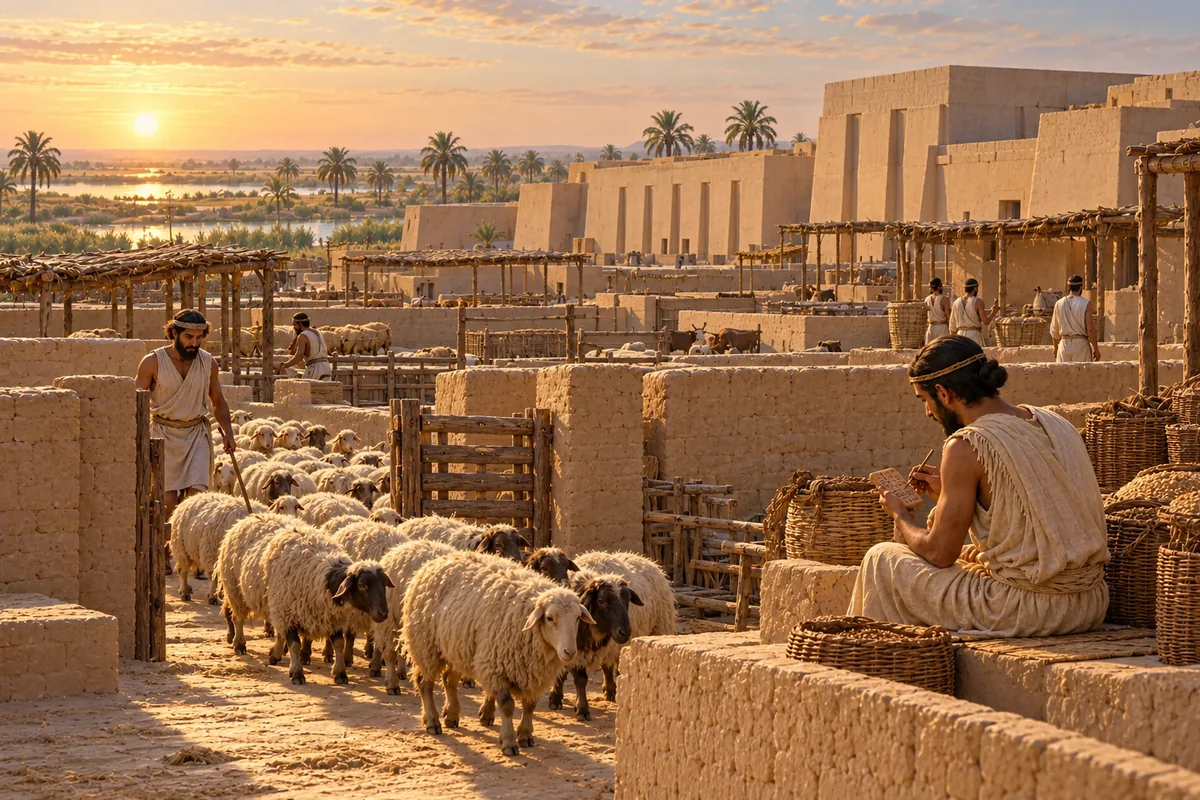
~2100 BCE · Reconstructed composite — see ORACC entry for manuscript witnesses
URU-KA-gina 12 / CDLI Seals 012020 (CDLI Seals 012020 (composite))
“(1) For Ninĝirsu. Iri-kagina, king of Lagaš.”
Source: Electronic Text Corpus of Sumerian Royal Inscriptions (ETCSRI), University of Vienna, edited by Gábor Zólyomi et al. https://oracc.museum.upenn.edu/etcsri/Q003652/
Read the full tablet entry~2100 BCE · Reconstructed composite — see ORACC entry for manuscript witnesses
URU-KA-gina 13
A weight-stone inscription certifying a 15-shekel standard in Ninĝirsu's name: direct physical evidence that Iri-kagina enforced metrological authority through dedicated cultic weights at Ĝirsu.
“(1) (Weight stone of) 15 shekel, for Ninĝirsu (certified by) Iri-kagina, king of Ĝirsu.”
Source: Electronic Text Corpus of Sumerian Royal Inscriptions (ETCSRI), University of Vienna, edited by Gábor Zólyomi et al. https://oracc.museum.upenn.edu/etcsri/Q003653/
Read the full tablet entry~2100 BCE · Reconstructed composite — see ORACC entry for manuscript witnesses
URU-KA-gina 14a
“(1) This (tree whose name is:) "Ninĝirsu will not revoke what he has agreed on with Iri-kagina" was planted by Iri-kagina, king of Lagaš"”
Source: Electronic Text Corpus of Sumerian Royal Inscriptions (ETCSRI), University of Vienna, edited by Gábor Zólyomi et al. https://oracc.museum.upenn.edu/etcsri/Q001150/
Read the full tablet entry~2100 BCE · Reconstructed composite — see ORACC entry for manuscript witnesses
URU-KA-gina 14b
“(1) This (tree whose name is:) "Ninĝirsu assigned position to Iri-kagina" was planted by Iri-kagina, king of Lagaš"”
Source: Electronic Text Corpus of Sumerian Royal Inscriptions (ETCSRI), University of Vienna, edited by Gábor Zólyomi et al. https://oracc.museum.upenn.edu/etcsri/Q001151/
Read the full tablet entry~2100 BCE · Reconstructed composite — see ORACC entry for manuscript witnesses
URU-KA-gina 14c
“(1) The datepalm tree standing on the right side, whose name is "Then king is never tired of caring for Eridug", was planted by Iri-kagina, king of Lagaš. (Year) 3."”
Source: Electronic Text Corpus of Sumerian Royal Inscriptions (ETCSRI), University of Vienna, edited by Gábor Zólyomi et al. https://oracc.museum.upenn.edu/etcsri/Q001152/
Read the full tablet entry~2100 BCE · Reconstructed composite — see ORACC entry for manuscript witnesses
URU-KA-gina 14d
“(1) The 80 meš trees of third quality, from the garden of the personal quarters, were planted by Iri-kagina, king of Ŋirsu within the shrine. (Year) 10."”
Source: Electronic Text Corpus of Sumerian Royal Inscriptions (ETCSRI), University of Vienna, edited by Gábor Zólyomi et al. https://oracc.museum.upenn.edu/etcsri/Q001153/
Read the full tablet entry~2100 BCE · Reconstructed composite — see ORACC entry for manuscript witnesses
URU-KA-gina 14f
“(1) The name of this (object) is: "Ninĝirsu cast his protecting arms over Iri-kagina like an anzud bird".”
Source: Electronic Text Corpus of Sumerian Royal Inscriptions (ETCSRI), University of Vienna, edited by Gábor Zólyomi et al. https://oracc.museum.upenn.edu/etcsri/Q001155/
Read the full tablet entry~2100 BCE · Reconstructed composite — see ORACC entry for manuscript witnesses
URU-KA-gina 14g
“(1) The name of this (object) is: "Ninĝirsu decided with Bau in favour of Iri-kagina in the temple of Unug".”
Source: Electronic Text Corpus of Sumerian Royal Inscriptions (ETCSRI), University of Vienna, edited by Gábor Zólyomi et al. https://oracc.museum.upenn.edu/etcsri/Q001156/
Read the full tablet entry