Chapter 05 · 2000 – 1600 BCE
Old Babylonian
Hammurabi, the Epic of Gilgamesh, mathematics.
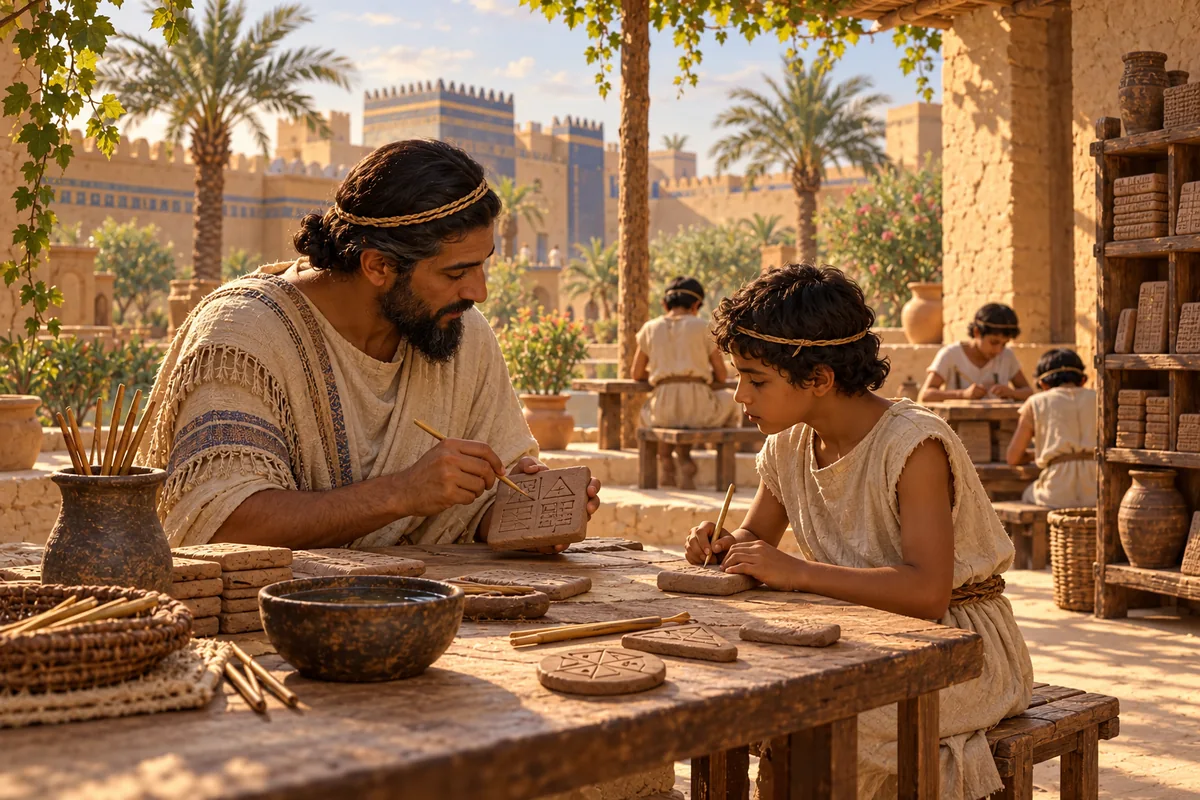
~1925 BCE · Reconstructed composite — see ORACC entry for manuscript witnesses
Bur-Sin 2003 / CDLI Seals 001562 (CDLI Seals 001562 (physical))
“(1) Warad-Šamaš, child of Ziyatum, is the servant of Bur-Suen.”
Source: Electronic Text Corpus of Sumerian Royal Inscriptions (ETCSRI), University of Vienna, edited by Gábor Zólyomi et al. https://oracc.museum.upenn.edu/etcsri/Q001978/
Read the full tablet entry~1925 BCE · Reconstructed composite — see ORACC entry for manuscript witnesses
Bur-Sin 2004 / CDLI Seals 012051 (CDLI Seals 012051 (composite))
“(1) ..., child of Damu-rabi, is the servant of Bur-Suen.”
Source: Electronic Text Corpus of Sumerian Royal Inscriptions (ETCSRI), University of Vienna, edited by Gábor Zólyomi et al. https://oracc.museum.upenn.edu/etcsri/Q001979/
Read the full tablet entry~1925 BCE · Reconstructed composite — see ORACC entry for manuscript witnesses
Bur-Sin 2005 / CDLI Seals 005549 (CDLI Seals 005549 (physical))
“(1) Bur-Suen, the powerful king, king of Sumer and Akkad: Lu-Enlila, the scribe, child of Lugal-ezen, is your servant.”
Source: Electronic Text Corpus of Sumerian Royal Inscriptions (ETCSRI), University of Vienna, edited by Gábor Zólyomi et al. https://oracc.museum.upenn.edu/etcsri/Q001980/
Read the full tablet entry~1925 BCE · Reconstructed composite — see ORACC entry for manuscript witnesses
Bur-Sin 2006 / CDLI Seals 002155 (CDLI Seals 002155 (physical))
“(1) Ilum-ahu, ..., is the servant of Bur-Suen.”
Source: Electronic Text Corpus of Sumerian Royal Inscriptions (ETCSRI), University of Vienna, edited by Gábor Zólyomi et al. https://oracc.museum.upenn.edu/etcsri/Q001981/
Read the full tablet entry~1925 BCE · Reconstructed composite — see ORACC entry for manuscript witnesses
Damiq-ilišu 2001
“(1) To Nergal of Apiak, the respected lord, the powerful lion, his master, Warad-Nanna, the royal scribe, child of Piqqum, his servant, dedicated this (lion statue) for the well being Damiq-ilišu, king of Sumer and Akkad.”
Source: Electronic Text Corpus of Sumerian Royal Inscriptions (ETCSRI), University of Vienna, edited by Gábor Zólyomi et al. https://oracc.museum.upenn.edu/etcsri/Q002009/
Read the full tablet entry~1925 BCE · Reconstructed composite — see ORACC entry for manuscript witnesses
Enlil-bani 01
“(1) Enlil-bani, the shepherd, who makes everything abundant for Nibru, the farmer of Urim’s plentiful barley, who purifies all divine powers of Eridug, the favourite en-priest of Unug, king of Isin, king of Sumer and Akkad, the spouse chosen in the heart by Inana.”
Source: Electronic Text Corpus of Sumerian Royal Inscriptions (ETCSRI), University of Vienna, edited by Gábor Zólyomi et al. https://oracc.museum.upenn.edu/etcsri/Q001983/
Read the full tablet entry~1925 BCE · Reconstructed composite — see ORACC entry for manuscript witnesses
Enlil-bani 02
Attests Enlil-bani's construction of Isin's great city wall ca. 1925 BCE, with its dedicatory name preserving the ideological formula that equated a king's name with the physical permanence of urban fortification.
“(1) Enlil-bani, the shepherd, who makes everything abundant for Nibru, the powerful king, king of Isin, king of Sumer and Akkad, the spouse chosen in the heart by Inana, the beloved of Enlil and Ninisina, built the great city wall of Isin. The name of this city wall is “Enlil-bani is a firm foundation.”
Source: Electronic Text Corpus of Sumerian Royal Inscriptions (ETCSRI), University of Vienna, edited by Gábor Zólyomi et al. https://oracc.museum.upenn.edu/etcsri/Q001984/
Read the full tablet entry~1925 BCE · Reconstructed composite — see ORACC entry for manuscript witnesses
Enlil-bani 03
Attests Enlil-bani's rebuilding of Isin's city wall c. 1925 BCE, anchoring both his public works programme and his claim to divine legitimacy through Inana's spousal election and Enlil's favour.
“(1) Enlil-bani, the shepherd, who makes everything abundant for Nibru, the powerful king, king of Isin, king of Sumer and Akkad, the spouse chosen in the heart by Inana, the beloved of Enlil and Ninisina, renovated the dilapidated wall of Isin.”
Source: Electronic Text Corpus of Sumerian Royal Inscriptions (ETCSRI), University of Vienna, edited by Gábor Zólyomi et al. https://oracc.museum.upenn.edu/etcsri/Q001985/
Read the full tablet entry