Chapter 04 · 2112 – 2004 BCE
Ur III · Neo-Sumerian
A bureaucratic golden age, the Code of Ur-Nammu.
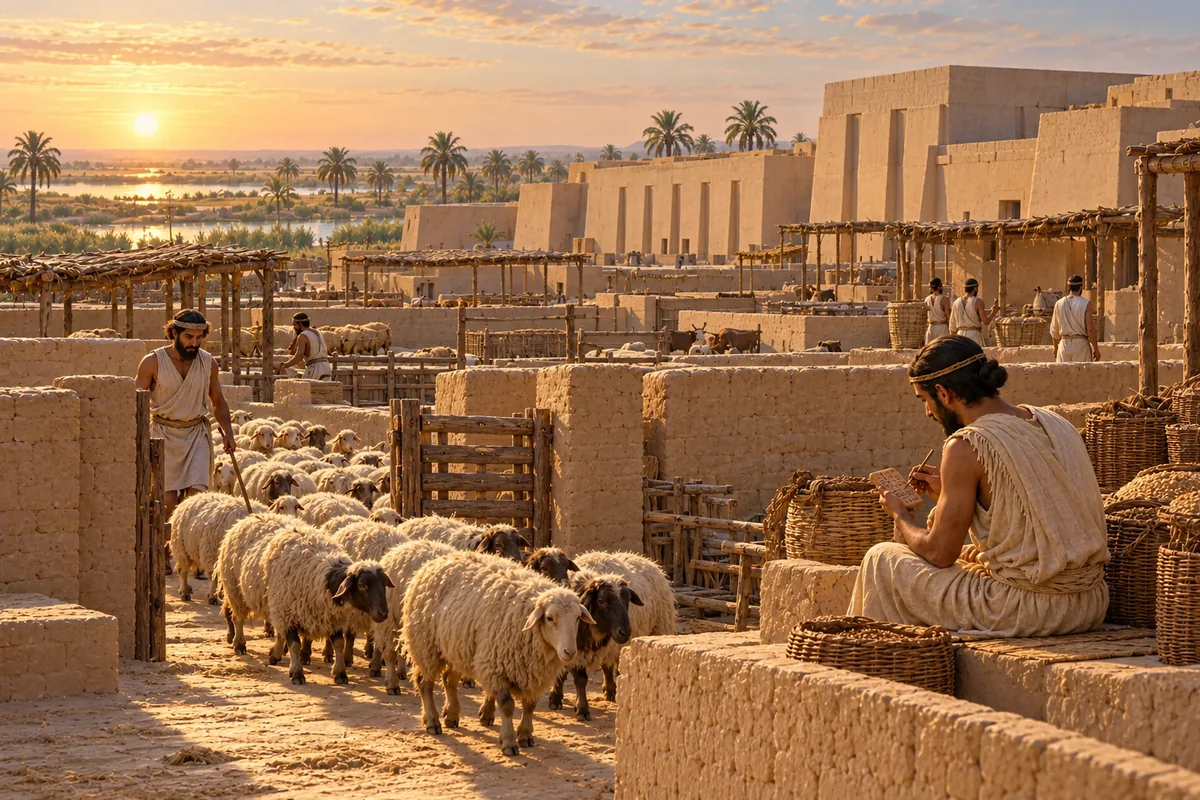
~2050 BCE · Reconstructed composite — see ORACC entry for manuscript witnesses
Šulgi 19
“(1) For Ennugi, his master, Šulgi, the powerful man, king of Urim, king of Sumer and Akkad, ....”
Source: Electronic Text Corpus of Sumerian Royal Inscriptions (ETCSRI), University of Vienna, edited by Gábor Zólyomi et al. https://oracc.museum.upenn.edu/etcsri/Q001660/
Read the full tablet entry~2050 BCE · Reconstructed composite — see ORACC entry for manuscript witnesses
Šulgi 20
Attests Šulgi's construction of the E-dur-anki, anchoring his building program at Ur to the goddess Inana and the ideological fusion of military power with divine patronage in the Ur III state.
“(1) For Inana, his lady, Šulgi, the powerful man, king of Urim, king of Sumer and Akkad, built the E-dur-anki.”
Source: Electronic Text Corpus of Sumerian Royal Inscriptions (ETCSRI), University of Vienna, edited by Gábor Zólyomi et al. https://oracc.museum.upenn.edu/etcsri/Q000971/
Read the full tablet entry~2050 BCE · Reconstructed composite — see ORACC entry for manuscript witnesses
Šulgi 2001
Votive dedication to Ninhursaĝa naming Šulgi by his full titulary — 'king of Sumer and Akkad' — attesting the ideological claim to universal kingship that defined Ur III imperial identity.
“(1) To Ninhursaĝa, his lady, Ur-Ašgi, ... this (vase) for the well-being of Šulgi, the powerful man, king of Urim, king of Sumer and Akkad.”
Source: Electronic Text Corpus of Sumerian Royal Inscriptions (ETCSRI), University of Vienna, edited by Gábor Zólyomi et al. https://oracc.museum.upenn.edu/etcsri/Q001729/
Read the full tablet entry~2050 BCE · Reconstructed composite — see ORACC entry for manuscript witnesses
Šulgi 2002 / CDLI Seals 005446 (CDLI Seals 005446 (composite))
“(1) Ur-Ašgi, governor of Adab: Aya-kala, the retainer, is your servant.”
Source: Electronic Text Corpus of Sumerian Royal Inscriptions (ETCSRI), University of Vienna, edited by Gábor Zólyomi et al. https://oracc.museum.upenn.edu/etcsri/Q001730/
Read the full tablet entry~2050 BCE · Reconstructed composite — see ORACC entry for manuscript witnesses
Šulgi 2003 / CDLI Seals 005448 (CDLI Seals 005448 (composite))
“(1) Ur-Ašgi, governor of Adab: Ur-paĝura, the scribe, (is) your servant.”
Source: Electronic Text Corpus of Sumerian Royal Inscriptions (ETCSRI), University of Vienna, edited by Gábor Zólyomi et al. https://oracc.museum.upenn.edu/etcsri/Q001731/
Read the full tablet entry~2050 BCE · Reconstructed composite — see ORACC entry for manuscript witnesses
Šulgi 2004
“(1) To Diĝirmah, his lady, Habaluge, governor ..., for the well-being of Šulgi, the powerful man, king of Urim, king of the four quarters.”
Source: Electronic Text Corpus of Sumerian Royal Inscriptions (ETCSRI), University of Vienna, edited by Gábor Zólyomi et al. https://oracc.museum.upenn.edu/etcsri/Q001732/
Read the full tablet entry~2050 BCE · Reconstructed composite — see ORACC entry for manuscript witnesses
Šulgi 2005 / CDLI Seals 002410 (CDLI Seals 002410 (composite))
“(1) Habaluge, governor of Adab: Amar-šuba, the scribe, is your servant.”
Source: Electronic Text Corpus of Sumerian Royal Inscriptions (ETCSRI), University of Vienna, edited by Gábor Zólyomi et al. https://oracc.museum.upenn.edu/etcsri/Q001733/
Read the full tablet entry~2050 BCE · Reconstructed composite — see ORACC entry for manuscript witnesses
Šulgi 2006 / CDLI Seals 000202 (CDLI Seals 000202 (composite))
“(1) Itur-ilum, governor of Babylon: Lugal-dalla, the scribe, is your servant.”
Source: Electronic Text Corpus of Sumerian Royal Inscriptions (ETCSRI), University of Vienna, edited by Gábor Zólyomi et al. https://oracc.museum.upenn.edu/etcsri/Q001734/
Read the full tablet entry